Journal
The Ultimate Notting Hill Area Guide: Navigating the Finest Streets of W11
Written by Nina Castellano · Investment Property Advisor
Published 19 February 2026 · Updated 8 May 2026 · 4 min read
The short answer
When a seller instructs me to represent their home in W11, they aren't just selling bricks and mortar; they are selling a specific slice of London’s cultural heritage. As the founder of Seymont London, we have spent our career navigating the stucco-fronted terraces and cobblestone mews that define this neighbourhood.
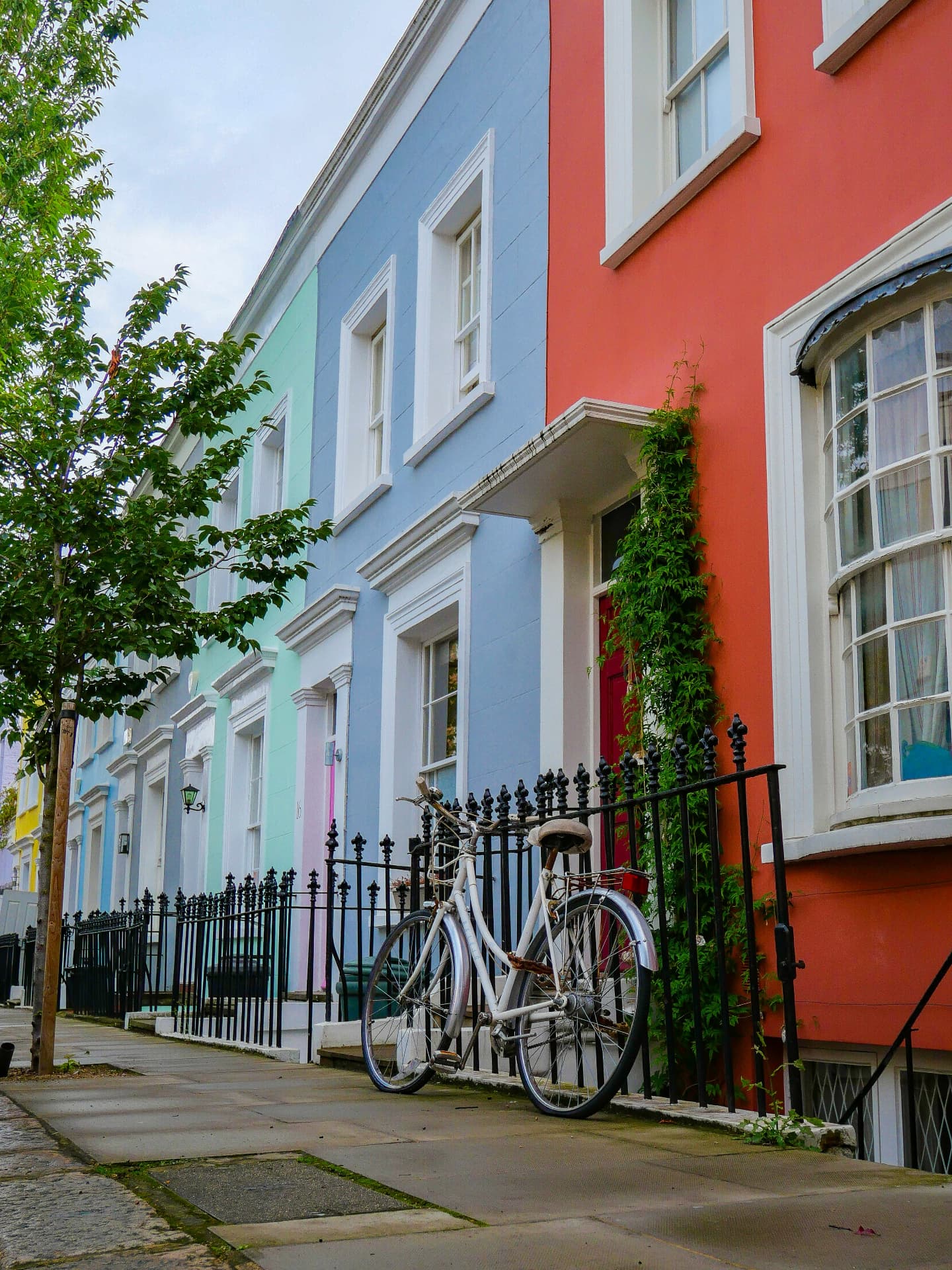
When a seller instructs me to represent their home in W11, they aren't just selling bricks and mortar; they are selling a specific slice of London’s cultural heritage. As the founder of Seymont London, we have spent our career navigating the stucco-fronted terraces and cobblestone mews that define this neighbourhood. Notting Hill is not a monolithic market. It is a tapestry of micro-climates where the difference between one side of a road and the other can mean a seven-figure swing in valuation. In this Notting Hill area guide, we intend to strip away the cinematic clichés and look at the market fundamentals that define life in the Royal Borough of Kensington & Chelsea today.
The Garden Square Hierarchy: Lansdowne and Elgin
To understand the pinnacle of the W11 market, one must look at the 'Garden Square' effect. According to HM Land Registry data, the average price in Notting Hill currently sits at approximately £2,450,000, but this figure is heavily skewed by the robust demand for houses with communal garden rights. Streets like Lansdowne Road and Elgin Crescent represent the gold standard. These are not merely addresses; they are keys to private ecosystems. Families here hold onto their properties for decades, creating a 'firm' market trend even when broader London indices fluctuate.
On Elgin Crescent, the draw is the direct access from the rear of the house into the communal gardens—a rarity that commands a significant premium over properties where one must cross a road to reach the green space. When we value these homes, we look beyond the square footage, which averages around £1,480 per square foot across the area. We value the privacy, the maturity of the trees, and the security that these shared spaces offer. It is a separate market entirely from the upper-floor conversion flats found elsewhere in the postcode.
Stucco Splendour: Chepstow Villas and Pembridge Square
Moving towards the eastern boundary of the neighbourhood, Chepstow Villas and Pembridge Square offer a different, more imposing architectural language. These are wide, grand streets characterized by detached and semi-detached villas that feel a world away from the bustle of the market. Pembridge Square, in particular, is an architectural triumph, where the white stucco reflects the light in a way that makes it a photographer’s dream. As we often tell our clients, the photography brief in Notting Hill is never a formality; it is the difference between a house that reads as a home and one that reads as a mere floor plan.
This pocket of W2 and W11 is also the epicentre of the local educational map. The presence of Wetherby and Pembridge Hall prep schools shapes the 'school-run geography' of the area. It is one of the primary reasons families remain anchored here long after their initial move. The proximity to these institutions, combined with the short walk to Notting Hill Gate station—with its Central, Circle, and District line connections—makes this the most practical corner of the neighbourhood for the busy professional family.
The Artistic Soul: Clarendon Cross and Pottery Lane
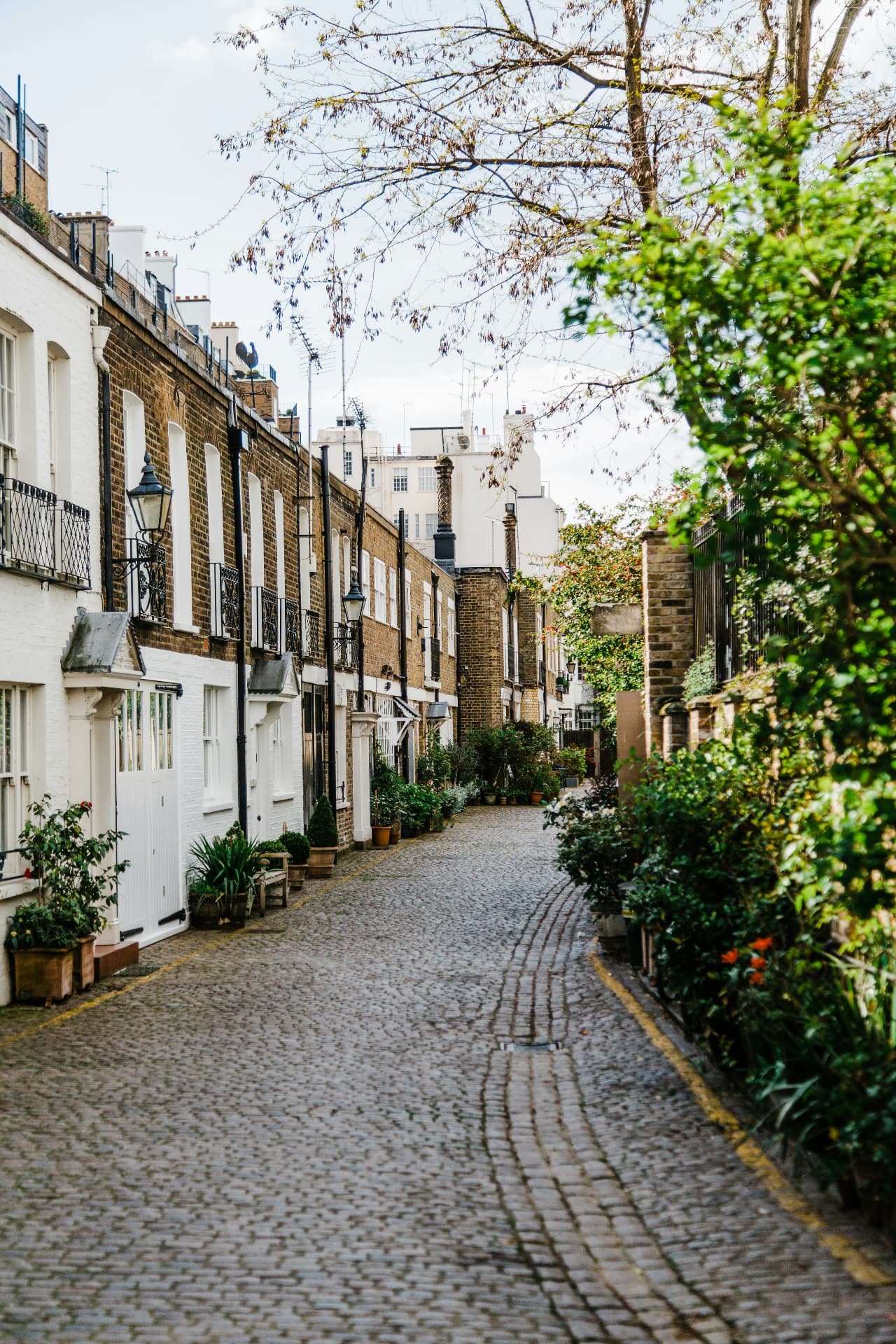
For those who seek a more bohemian or 'village' atmosphere, the area around Clarendon Cross and Pottery Lane is incomparable. This is the historic 'Potteries and Piggeries' district, now transformed into one of the most charming residential enclaves in London. The houses here are often smaller in scale than the giants of Lansdowne Road, but they possess a character and intimacy that is highly sought after. Pottery Lane, with its brickwork and heritage feel, appeals to a buyer who values history over high-gloss finishes.
Living near Clarendon Cross means having a lifestyle defined by independent boutiques and the famous Summerill & Bishop. It represents the more curated side of this Notting Hill area guide. While the average price per square foot remains high, the buyer pool here is 'fiercely loyal,' often moving from one street to another within a three-block radius just to stay within the micro-community. When marketing a property here, we focus on the narrative of the street as much as the internal specification.
Talk to Seymont
What's your home worth?
A considered view on price, timing and how to bring your London home to market — a personal reply within 24 hours.
Your property
Step 1 of 2From Portobello to Westbourne Grove: The Commercial Heart
One cannot discuss Notting Hill without the spine of Portobello Road and the chic elegance of Westbourne Grove. While Portobello is the tourist heartbeat, the residential properties tucked behind the market stalls offer a vibrant, urban energy. The transition to Westbourne Grove marks a shift toward high-end retail and some of London's best dining, such as Granger & Co. The property mix here is diverse, ranging from classic three-to-five-bedroom terraced houses to the ubiquitous conversion flats.
However, this Notting Hill area guide must note a divergence in the current market. HM Land Registry figures and local observations show that while house prices remain firm, the market for upper-floor conversion flats without direct outside space has become slower. Buyers in the current climate are prioritising light and air. Therefore, if you are selling a flat on Ladbroke Grove or Westbourne Grove, the presentation and 'lifestyle' staging become critical to stand out in a more crowded segment of the market.
Connectivity and Green Space
Despite its leafy appearance, Notting Hill is exceptionally well-connected. Beyond Notting Hill Gate, Ladbroke Grove station serves the Hammersmith & City line, providing direct access to the City fringe. For international residents, the proximity to Paddington—roughly 15 minutes on foot from W2—is a significant draw, offering the Elizabeth line and the Heathrow Express. This ease of movement, combined with the proximity to Holland Park and Kensington Gardens, cements the area’s status as a premier global destination.
As a senior-led agency, we personally oversee the strategy for every home we represent. In a market as nuanced as W11, you need more than a valuation; you need an advocate who understands the heritage of every street name mentioned in this Notting Hill area guide. Whether it is the quiet cobbles of a hidden mews or the grandeur of a garden square, every property has a specific buyer profile. Our role is to ensure your home is positioned to reach them with precision.
Talk to Seymont
What's your home worth?
A considered view on price, timing and how to bring your London home to market — a personal reply within 24 hours.
Your property
Step 1 of 2About the author
Nina CastellanoInvestment Property Advisor
Nina advises landlords and investors on rental yields, tenant demand and portfolio structure across Greater London, after running lettings and management at Bellhouse Property Partners. She has overseen single units and multi-property portfolios, and works through compliance, void periods and running costs before a purchase is agreed. Her articles deal with the numbers behind a buy-to-let rather than the headline gross yield.
Lettings and portfolio management · 9 years in London rentals
- Buy-to-let
- Rental yields
- Portfolio strategy
- Landlord compliance
Frequently asked
- What is the average property price in Notting Hill currently?
- Based on data updated in August 2026, the average price for a property in Notting Hill is approximately £2,450,000, with an average price per square foot of £1,480, according to HM Land Registry figures.
- Which are the best schools in the Notting Hill area?
- The area is renowned for its excellent schools, including Fox Primary School, Notting Hill Preparatory School, and the prestigious Wetherby and Pembridge Hall prep schools.
- Is the Notting Hill property market currently rising?
- The market is currently split. There is firm demand and price stability for terraced houses with communal garden rights. However, the market is moving more slowly for upper-floor conversion flats that lack private or communal outdoor space.