Journal
Average Rent in Notting Hill: A Complete Guide for 2024
Written by Thomas Lindqvist · Mortgage & Financing Specialist
Published 28 October 2025 · Updated 3 August 2026 · 8 min read
The short answer
Understanding the average rent in Notting Hill requires more than a cursory glance at property listings. This distinguished corner of West London, stretching from the elegant garden squares around Ladbroke Grove to the vibrant market atmosphere of Portobello Road, commands some of the capital's most distinctive rental premiums.
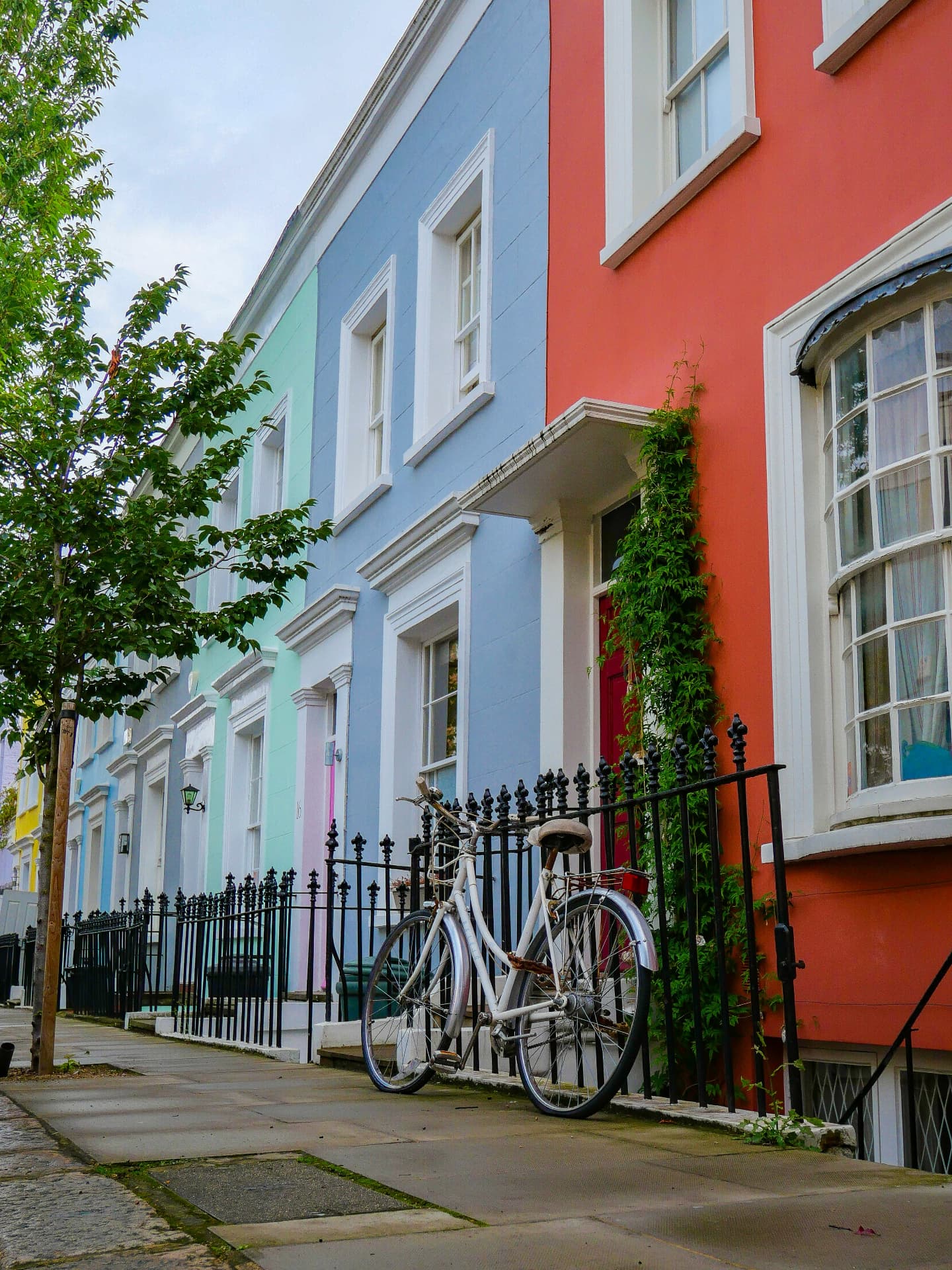
Understanding the average rent in Notting Hill requires more than a cursory glance at property listings. This distinguished corner of West London, stretching from the elegant garden squares around Ladbroke Grove to the vibrant market atmosphere of Portobello Road, commands some of the capital's most distinctive rental premiums. Our team has analysed the latest HM Land Registry and ONS data to provide landlords and tenants with a comprehensive picture of what drives Notting Hill rent prices in today's market. Whether you're considering a studio flat near Notting Hill Gate or a Georgian townhouse overlooking one of the area's coveted communal gardens, the rental landscape here reflects both the neighbourhood's enduring cultural cachet and its prime Zone 1-2 location.
Current Rental Market Overview
The question of how much is rent in Notting Hill depends significantly on property type and exact location. According to ONS private rental market statistics, studio apartments currently command monthly rents between £875 and £1,375, whilst one-bedroom properties range from £1,150 to £1,825. These figures position Notting Hill firmly within London's premium rental tier, though the spectrum of available properties means the area accommodates a broader tenant profile than many assume.
Two-bedroom flats—the most commonly let property type in the area—fetch between £1,575 and £2,475 per calendar month, with properties overlooking Pembridge Square and the quieter stretches of Chepstow Villas commanding the upper reaches of this bracket. Three-bedroom homes range from £2,100 to £3,300, whilst larger family houses with four bedrooms typically require £2,825 to £4,400 monthly. At the pinnacle of the market, five-bedroom period properties can command between £3,700 and £5,775, particularly those on notable addresses such as Lansdowne Road and Clarendon Cross.
We've observed that rental values correlate closely with architectural character and garden access. Victorian conversions with original features and properties within sight of the area's famous communal gardens consistently achieve premiums of 15-20% above comparable specifications elsewhere in W11. The enduring appeal of Notting Hill's residential streets—immortalised in film and literature—continues to underpin sustained tenant demand across all property sizes.
Notting Hill Rental Yields and Investment Performance
For landlords evaluating Notting Hill rental yields, the relationship between purchase prices and achievable rents requires careful consideration. HM Land Registry data reveals a median sales price of £765,000 across 146 transactions in the most recent reporting period, though this figure encompasses significant variation by property type. Flats, which represent the majority of sales at 98 transactions, achieved a median of £600,000, whilst terraced houses commanded £1,225,000.
Calculating gross yields on these figures, a typical one-bedroom flat purchased at median price and let at the middle of the rental range (approximately £1,490 per month) would generate a gross yield of around 3.0%. This sits below inner London's average rental yield, reflecting Notting Hill's status as a capital growth rather than income-focused investment location. Two-bedroom flats offer marginally improved returns at approximately 3.2-3.8%, though investors should factor in Kensington and Chelsea's service charge landscape and the area's relatively high management costs.
The yield compression in Notting Hill compared to outer London boroughs reflects the area's appeal to international and high-net-worth tenants seeking prestige addresses rather than value-driven accommodation. Properties near the famous Notting Hill Bookshop on Blenheim Crescent or within walking distance of the neighbourhood's acclaimed restaurants—including establishments around Westbourne Grove—consistently achieve occupancy rates above 95%, minimising void periods that erode effective returns.
Our team advises that Notting Hill property investment suits those pursuing a balanced strategy: modest rental income supplemented by long-term capital appreciation in one of London's most protected residential markets. The conservation area status covering much of the neighbourhood limits new supply, whilst demand from corporate relocations, embassy staff, and creative industry professionals remains structurally robust.
Property Types and Rental Characteristics
The architectural tapestry of Notting Hill directly influences its rental market segmentation. The area's 98 flat sales (median £600,000) contrast with just 32 terraced house transactions (median £1,225,000), reflecting the predominance of Victorian and Edwardian conversions that characterise streets radiating from Ladbroke Grove and Elgin Crescent. These converted flats, typically spanning one or two bedrooms, form the backbone of the rental market and attract young professionals and couples drawn to the area's village atmosphere within central London.
Terraced houses, concentrated along addresses such as Portobello Road's residential stretches and the elegant crescents north of Notting Hill Gate, command substantial premiums when available to let. Their scarcity—evidenced by transaction volumes—means rental properties rarely remain available beyond a fortnight when correctly priced. We've noted that three and four-bedroom terraced homes in original condition with private gardens achieve the highest tenant competition, particularly from families seeking catchment access to the area's sought-after state and independent schools.
At the market's apex, the handful of semi-detached (median £6,975,000) and detached properties (£9,300,000 for the single recorded transaction) occasionally enter the rental market at £8,000-£15,000+ per month. These rare instructions typically arise from overseas owners seeking interim income during extended absences, and they attract corporate lets and short-term arrangements with international executives.
The 13 "other" category transactions (median £1,100,000) likely encompass commercial conversions, live-work units, and unconventional property formats that reflect Notting Hill's creative heritage. When these reach the rental market, they often appeal to media professionals and entrepreneurs seeking characterful space that doubles as business premises, particularly around the Portobello Road antiques and vintage market corridor.
Talk to Seymont
What's your home worth?
A considered view on price, timing and how to bring your London home to market — a personal reply within 24 hours.
Your property
Step 1 of 2Location Premium: Streets and Micro-Markets
Notting Hill's rental geography reveals pronounced micro-markets that justify significant price variation within postcodes. Chepstow Villas, identified in HM Land Registry data as one of the area's most active streets for transactions, exemplifies this phenomenon. Properties here benefit from proximity to both Notting Hill Gate's transport connections and the leafy calm of Pembridge Square's private gardens, creating a sweet spot for professional tenants who prioritise both convenience and tranquillity.
Lansdowne Road and the surrounding Ladbroke estate—characterised by stucco-fronted terraces and access to communal gardens—commands the area's steepest rental premiums per square foot. The architectural cohesion and restricted vehicle access create an insulated residential enclave that appeals particularly to families and tenants relocating from comparable international addresses. Our team regularly advises landlords here that presentation and garden maintenance directly impact achievable rents, with well-maintained properties securing premiums of £400-600 monthly over equivalent but less polished alternatives.
Portobello Road presents a more diverse rental proposition. Properties at the northern, residential end near the intersection with Westbourne Grove attract tenants drawn to the area's weekend market energy and eclectic retail mix, including independent shops, the famous bookshop, and numerous restaurants, bars and pubs that define Notting Hill's social landscape. Conversely, flats directly above commercial premises or closer to the market's tourist-heavy sections trade at 10-15% discounts to nearby residential streets, reflecting noise considerations and weekend footfall.
Westbourne Grove and Elgin Crescent occupy the middle ground: substantial period properties on generous plots that lack the garden square prestige but offer practical family accommodation. These addresses particularly suit tenants prioritising space and local amenities—excellent restaurants in Notting Hill cluster here—over postal bragging rights, creating opportunities for landlords to achieve strong yields relative to purchase prices.
Market Dynamics and Tenant Profiles
The composition of Notting Hill's tenant base significantly influences rental sustainability and property management considerations. Our experience across the W11 postcode reveals a roughly even split between British professionals (often working in media, finance, and creative industries centred on nearby Soho and the City) and international tenants drawn by the area's global recognition and village-scale walkability.
Corporate relocations represent approximately 25-30% of lettings activity, with tenants typically seeking initial 12-month arrangements whilst orienting themselves to London's geography before committing to purchases. These tenants often prioritise furnished specifications and proximity to international schools, making three and four-bedroom houses near Holland Park particularly attractive. The presence of multiple transport options—Notting Hill Gate serves Central, Circle, and District lines—facilitates commutes across London's business districts, though many tenants work hybrid schedules that emphasise local amenity quality over pure transport speed.
The student and young professional segment, whilst present, occupies a smaller market share than in areas like King's Cross or Clapham. Studio and one-bedroom demand here skews towards established professionals in their late twenties and thirties rather than recent graduates, reflecting rental price points that exceed typical first-job budgets. This demographic stability contributes to Notting Hill's relatively low tenant turnover rates—we observe average tenancy lengths of 18-24 months compared to inner London's 12-15 month norm.
Seasonal variation in Notting Hill rental demand proves less pronounced than across much of the capital. Whilst the traditional September peak (driven by academic calendars and corporate year-end relocations) generates increased inquiry volumes, the area's appeal to international tenants arriving year-round smooths demand curves. Landlords benefit from this stability through reduced void risk, though achieving optimal rents still requires strategic timing and presentation that meets the area's exacting tenant expectations.
Future Outlook and Market Considerations
Several structural factors suggest Notting Hill rent prices will maintain their premium positioning relative to Greater London averages. The neighbourhood's conservation area protections effectively cap housing supply, whilst ongoing gentrification of adjacent areas—particularly North Kensington and Kensal Rise—increases pressure on the existing W11 stock. We anticipate this supply-demand imbalance will support rental growth of 3-4% annually over the medium term, broadly tracking London's professional wage inflation.
The maturation of Crossrail (Elizabeth Line) services, though centred on stations east and west of Notting Hill, enhances the area's connectivity to Canary Wharf, the West End, and Heathrow. This improved transport infrastructure particularly benefits professional tenants whose employment patterns involve multi-site working or frequent business travel, potentially expanding the catchment of tenants for whom Notting Hill represents a viable base. Properties within 10-minute walking distance of Ladbroke Grove station (Elizabeth Line accessible via interchange) have already demonstrated modest rental growth acceleration.
For landlords and prospective tenants seeking detailed market intelligence, understanding these dynamics proves essential. Our <a href="/estate-agents/notting-hill">Notting Hill estate agent services</a> provide current market appraisals that reflect real-time transaction data rather than aggregated historical averages. Those exploring investment opportunities can review our <a href="/property-for-sale/notting-hill">properties for sale in Notting Hill</a> to understand the capital outlay required for various property types, whilst our <a href="/house-prices/notting-hill">Notting Hill house prices analysis</a> contextualises rental yields within the broader sales market.
Landlords considering entering or expanding within the Notting Hill market should examine our <a href="/let-your-property/notting-hill">property letting services</a>, which address the specific compliance, presentation, and tenant matching requirements that characterise this distinctive market. The interplay between rental income, capital values, and the area's unique character demands local expertise that generic property platforms cannot replicate—a consideration that proves particularly crucial when rental margins depend on optimising every aspect of property presentation and positioning.
Talk to Seymont
What's your home worth?
A considered view on price, timing and how to bring your London home to market — a personal reply within 24 hours.
Your property
Step 1 of 2About the author
Thomas LindqvistMortgage & Financing Specialist
Thomas advised buyers for a decade at Ashgrove Financial, an independent brokerage, on borrowing capacity, product selection and the full cost of a purchase, including stamp duty, legal fees and lender charges. He follows rate decisions and lender criteria changes and translates them into what a household can realistically afford. His guides cover affordability, remortgaging and the closing costs that buyers routinely underestimate.
CeMAP qualified · Whole-of-market mortgage advice background
- Mortgages
- Affordability
- Closing costs
- Remortgaging
Frequently asked
- What is the average monthly rent for a two-bedroom flat in Notting Hill?
- According to ONS rental market data, two-bedroom flats in Notting Hill typically rent for between £1,575 and £2,475 per calendar month. Properties with period features, garden access, or locations on prestigious streets such as Pembridge Square and Chepstow Villas command the upper end of this range, whilst conversions further from the area's garden squares tend towards the lower bracket. Actual achievable rents depend heavily on specification, condition, and exact micro-location within the W11 postcode.
- Are rental yields in Notting Hill competitive compared to other London areas?
- Notting Hill rental yields are relatively modest by London standards, typically ranging from 3.0-3.8% gross for standard residential properties. HM Land Registry data shows median flat prices of £600,000, which when combined with rental ranges produce yields below the inner London average of 4-5%. However, investors choose Notting Hill primarily for capital preservation and growth rather than income generation, with the area's conservation protections and enduring prestige supporting long-term value appreciation that compensates for yield compression.
- Which streets in Notting Hill offer the best value for tenants?
- Tenants seeking relative value within Notting Hill should consider properties along Westbourne Grove, the northern residential sections of Portobello Road, and streets east of Ladbroke Grove. These locations offer genuine W11 credentials and excellent access to the area's restaurants, pubs, bars, and shops—including proximity to Notting Hill Gate's transport hub—whilst trading at 10-15% discounts to premium addresses like Lansdowne Road and Clarendon Cross. Properties slightly further from communal garden squares typically offer better space-per-pound ratios without sacrificing the neighbourhood's essential character.
- How long do properties typically stay on the rental market in Notting Hill?
- Well-presented properties at appropriate rental levels in Notting Hill typically secure tenants within 10-20 days of marketing launch. The area benefits from structurally high demand driven by international recognition, excellent local amenities (including renowned restaurants in Notting Hill and the famous bookshop), and strong transport links via Notting Hill Gate and Ladbroke Grove stations. Properties requiring significant tenant compromise—such as ground-floor flats on busy commercial streets or those lacking period features at premium price points—may extend to 4-6 weeks, though this remains below inner London averages.
- What additional costs should landlords factor into Notting Hill rental calculations?
- Notting Hill landlords face above-average operating costs that impact net yields. Service charges in purpose-built blocks and converted mansion houses typically range from £2,000-5,000 annually, whilst buildings with porters or lifts may exceed £8,000. Ground rent, building insurance (approximately 15-20% above outer London due to property values), and maintenance costs for period properties with original features add further expense. Successful lettings also require presentation standards that meet tenant expectations—professional cleaning, periodic decoration, and garden maintenance are essential rather than optional in this competitive market.