Journal
Living in Kensington
Written by Julian Reyes · Licensed Real Estate Agent
Published 14 January 2026 · Updated 15 April 2026 · 6 min read
The short answer
Living in Kensington places you at the heart of one of London's most distinguished neighbourhoods, where sweeping garden squares, world-class museums and elegant Victorian terraces define the streetscape. Our team has worked across every corner of this Royal Borough postcode, and we've watched the area evolve whilst retaining the refined character that has attracted discerning residents for generations.
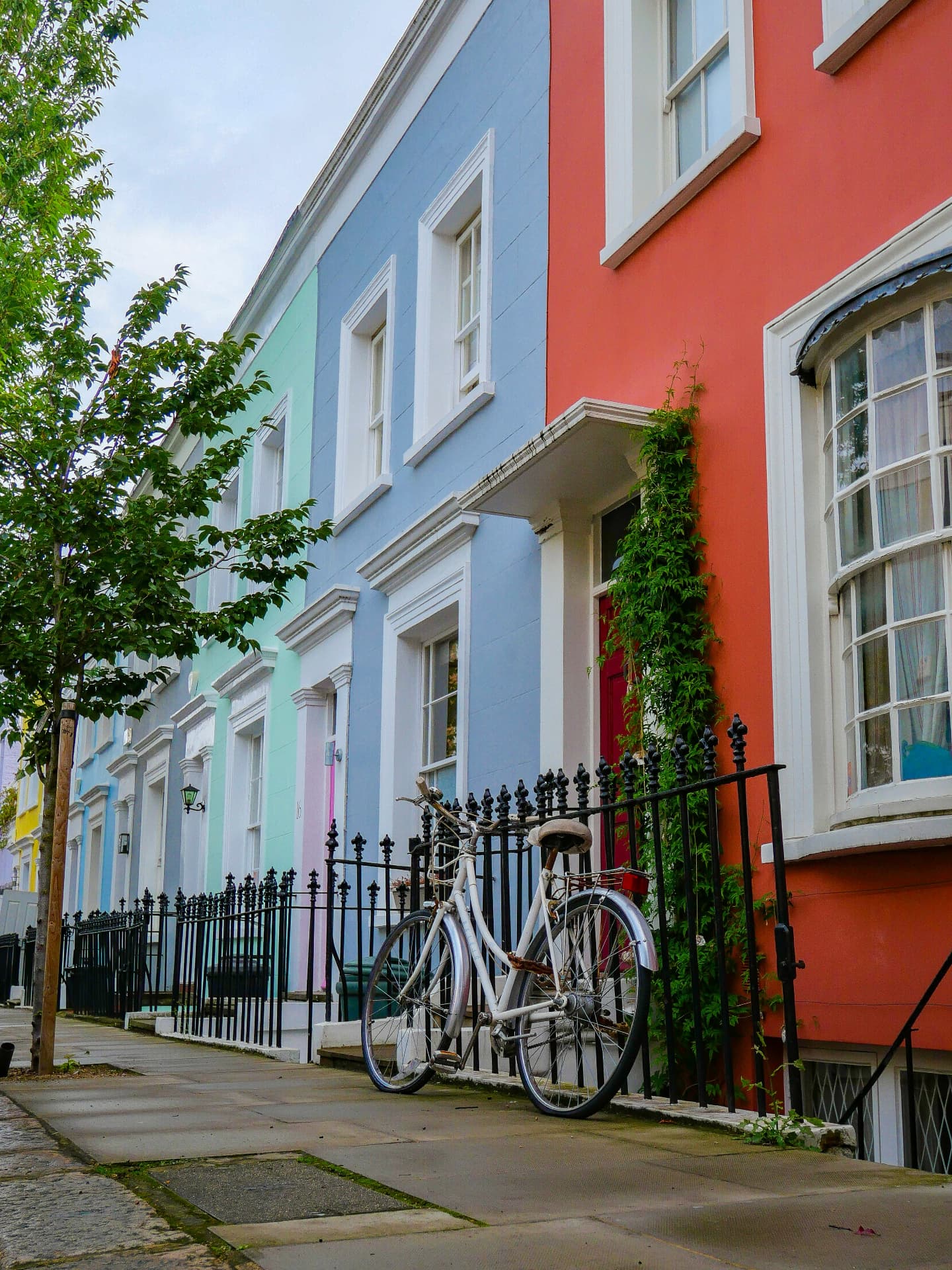
Living in Kensington places you at the heart of one of London's most distinguished neighbourhoods, where sweeping garden squares, world-class museums and elegant Victorian terraces define the streetscape. Our team has worked across every corner of this Royal Borough postcode, and we've watched the area evolve whilst retaining the refined character that has attracted discerning residents for generations. Whether you're drawn to the bustle of Kensington High Street, the cultural prestige of South Kensington's museum quarter, or the residential calm of tree-lined streets such as Phillimore Gardens and Edwardes Square, this area offers an unmatched blend of heritage, convenience and cosmopolitan living.
What Is Kensington Like?
Kensington is a study in contrasts: grand stucco-fronted mansion blocks stand alongside intimate mews houses, whilst Kensington Palace Gardens—often cited as one of the world's most expensive residential streets—runs parallel to vibrant retail thoroughfares. The neighbourhood feels simultaneously international and quintessentially British, with embassy buildings on quiet crescents and independent boutiques tucked between heritage department stores.
The area divides naturally into distinct pockets. South Kensington pulses with museum visitors and students from Imperial College and the Royal College of Art, its pavements lined with French patisseries and Italian cafés that reflect the long-established European community. High Street Kensington and the streets radiating from Kensington Church Street offer a more commercial energy, with flagship stores, design showrooms and the historic Kensington Arcade. West Kensington and the streets near Kensington Olympia lean more residential, with excellent value compared to their eastern neighbours and superb connectivity for professionals commuting across the capital.
Architecturally, Kensington showcases the best of Victorian and Edwardian London. Grand communal gardens remain a defining feature—Kensington Square, one of London's oldest, dates to the 1680s—and residents with garden access enjoy a rare luxury in central London. The streets are impeccably maintained, and the presence of Kensington Palace and its public gardens reinforces the area's royal heritage and green character.
Kensington Lifestyle and Amenities
The Kensington lifestyle revolves around culture, quality and convenience. The Natural History Museum, Victoria and Albert Museum and Science Museum sit within a few minutes' walk of one another in South Kensington, offering world-renowned collections with free entry. The Royal Albert Hall hosts everything from classical concerts to contemporary performances, whilst smaller venues such as the Coronet Theatre on Notting Hill Gate provide independent cinema and live entertainment.
Kensington High Street remains one of west London's premier shopping destinations, anchored by a flagship Whole Foods Market and an eclectic mix of high-street brands and independent retailers. Kensington Church Street is renowned for its antiques dealers and interior design specialists, attracting collectors and decorators from across the globe. For daily essentials, residents benefit from multiple supermarkets, artisan bakeries, organic grocers and the twice-weekly Kensington Farmers' Market.
Dining options reflect the area's cosmopolitan character. South Kensington and the streets around Gloucester Road are particularly strong for French and Italian cuisine, whilst Kensington High Street offers diverse international choices. The neighbourhood's private members' clubs, historic pubs and Michelin-recognised restaurants cater to every occasion, from casual lunches to celebratory dinners.
Families value Kensington's exceptional schools, both state and independent. The area is home to several outstanding primary and secondary institutions, and the proximity to Kensington Gardens and Holland Park provides unparalleled outdoor space for children. The combination of green space, cultural enrichment and safe, walkable streets makes Kensington one of London's most family-friendly central postcodes.
Kensington Transport Links
Kensington transport connections are among the finest in London, with six Underground stations serving the area and ensuring rapid access to every corner of the capital. High Street Kensington (Circle and District lines) provides direct services to Victoria, Westminster and the City, whilst South Kensington (Circle, District and Piccadilly lines) offers additional Heathrow connectivity—a major advantage for international professionals and frequent travellers.
Gloucester Road, Earl's Court and West Kensington stations extend the transport web further, and Kensington Olympia provides Overground services to Clapham Junction, Stratford and beyond, plus occasional mainline services. For those commuting to Canary Wharf, Paddington or King's Cross, journey times rarely exceed thirty minutes.
Bus routes blanket the area, with services running along Kensington High Street, Kensington Church Street and Cromwell Road providing alternatives to the Tube and convenient links to neighbouring Notting Hill, Chelsea and Knightsbridge. Cycling infrastructure has improved considerably in recent years, with dedicated lanes and Santander Cycle docking stations throughout the neighbourhood.
For motorists, Kensington's position between the A4 and A40 enables swift access to Heathrow, the M4 and the M40. Controlled Parking Zones operate across the area, and most mansion blocks and period conversions include allocated or underground parking—an increasingly rare amenity in central London.
Talk to Seymont
What's your home worth?
A considered view on price, timing and how to bring your London home to market — a personal reply within 24 hours.
Your property
Step 1 of 2Kensington Property Market
According to HM Land Registry data, Kensington recorded 76 property sales with a median price of £1,300,000, reflecting the area's status as one of London's premier residential addresses. Flats dominate the market—56 transactions with a median of £1,075,000—ranging from £249,950 for smaller conversions to over £11 million for lateral apartments in prestigious mansion blocks along Campden Hill Road and Kensington Court.
Terraced houses commanded a median of £4,150,000 across 12 sales, with properties on Holland Street, Stafford Terrace and Kensington Square particularly sought-after. The single detached house sale completed at £4,700,000, whilst the sole semi-detached transaction reached £10,250,000, illustrating the premium attached to rare freehold family homes in this tightly held market. The 'other' category—which includes mixed-use buildings and new-build developments—saw six sales with a median of £3,705,000, underscoring the diversity of Kensington's property offering.
For those exploring [property for sale in Kensington](/property-for-sale/kensington), our team observes consistent demand for lateral flats with outdoor space, period houses requiring sympathetic refurbishment, and secure, portered buildings appealing to international buyers and downsizers alike. Notable streets such as Argyll Road, Phillimore Gardens and Edwardes Square consistently attract multiple offers when properties come to market, and competitive bidding remains common for the best-presented homes.
Rental demand is equally robust. ONS data indicates studio apartments range from £1,500 to £2,350 per calendar month, one-bedroom flats from £2,000 to £3,100, and two-bedroom properties from £2,725 to £4,250. Larger family homes command £3,625 to £5,650 for three bedrooms, £4,825 to £7,550 for four, and £6,350 to £9,900 for five or more bedrooms. Landlords considering opportunities can find guidance on [letting your property in Kensington](/let-your-property/kensington), where tenant quality and rental yields remain strong thanks to the area's enduring appeal to professionals, diplomats and academics.
Why Choose Kensington?
Kensington represents the ideal intersection of central London convenience and residential tranquillity. You are never more than a few minutes from a Tube station, a green park, a world-class museum or a superb restaurant, yet the streets retain a village-like intimacy rare in Zone 1. The architecture is stunning, the schools are excellent, and the community is genuinely international—walk along any street and you will hear a dozen languages before you reach the corner.
For families, the combination of outstanding education, safe streets and proximity to Kensington Gardens is unrivalled. For professionals, the transport links and workspace options—from co-working hubs to quiet cafés—support flexible working patterns. For those who value culture, the museums, galleries and performance venues on your doorstep are simply unmatched elsewhere in the capital.
Our team at [Seymont London's Kensington office](/estate-agents/kensington) has guided countless buyers, sellers, landlords and tenants through transactions in this nuanced market. We understand the micro-markets within Kensington—the subtle differences between streets, the importance of garden access, the appeal of specific mansion blocks—and we apply that knowledge to every instruction. Whether you're curious about [house prices in Kensington](/house-prices/kensington) or ready to make your next move, we're here to help you navigate this exceptional neighbourhood with insight and integrity.
Talk to Seymont
What's your home worth?
A considered view on price, timing and how to bring your London home to market — a personal reply within 24 hours.
Your property
Step 1 of 2About the author
Julian ReyesLicensed Real Estate Agent
Julian has spent eleven years handling residential sales across west and central London, previously with the independent agencies Harlowe & Vance and Marchmont Row. He runs listings end to end, from pricing and presentation through to negotiating offers and holding chains together to completion. His writing focuses on the practical mechanics of buying and selling a home in a market where timing and preparation decide the outcome.
Licensed estate agent · 11 years in London residential sales
- Residential sales
- First-time buyers
- Offer negotiation
- Chain management
Frequently asked
- Is Kensington expensive to live in?
- Yes, Kensington is one of London's most expensive areas. The median property price stands at £1,300,000 according to HM Land Registry data, with flats typically around £1,075,000 and terraced houses at £4,150,000. Rental costs are similarly premium, with one-bedroom flats ranging from £2,000 to £3,100 per month and family homes commanding significantly more. However, the area's exceptional transport, schools, culture and safety justify the premium for many residents.
- What is the difference between Kensington, South Kensington and High Street Kensington?
- These names describe different parts of the broader Kensington area. South Kensington refers to the museum quarter around South Kensington station, known for its cultural institutions, French and Italian communities, and garden squares. High Street Kensington centres on the retail thoroughfare and the station of the same name, offering shopping, dining and a more commercial atmosphere. West Kensington and Kensington Olympia lie further west and tend to be more residential with slightly lower price points. All fall within the Royal Borough of Kensington and Chelsea.
- How good are transport links in Kensington?
- Kensington transport links are outstanding. The area is served by six Underground stations—High Street Kensington, South Kensington, Gloucester Road, Earl's Court, West Kensington and Kensington Olympia—covering the Circle, District, Piccadilly and Overground lines. South Kensington offers direct Piccadilly Line services to Heathrow, whilst journeys to the City, West End and Canary Wharf typically take under 30 minutes. Numerous bus routes and improving cycling infrastructure further enhance connectivity.
- Is Kensington family-friendly?
- Absolutely. Kensington is one of central London's most family-friendly neighbourhoods, offering excellent state and independent schools, immediate access to Kensington Gardens and Holland Park, and safe, leafy streets. The Natural History Museum, Science Museum and V&A provide free educational entertainment, whilst the local community includes many families. Properties with communal gardens and proximity to green space are particularly popular with parents seeking a high quality of life in Zone 1.
- What are the best streets to live on in Kensington?
- Notable streets include Campden Hill Road, Kensington Church Street, Holland Street, Phillimore Gardens, Argyll Road, Kensington Square, Stafford Terrace and Edwardes Square, all of which feature beautiful period architecture and strong price performance. Kensington Palace Gardens is world-famous for its ultra-prime properties. The 'best' street ultimately depends on your priorities—proximity to transport, garden access, architectural style and local amenities all play a role, and our team can guide you to the streets that match your requirements.