Guides
The Definitive Guide for International Buyers: Buying Property in London from Abroad
Written by Nina Castellano · Investment Property Advisor
Published 20 January 2026 · Updated 17 April 2026 · 4 min read
The short answer
At Seymont London, we founded this agency on the principle that prime London property requires a bespoke, single-point-of-contact approach. Whether you are looking for a stucco-fronted villa in Notting Hill or a refined mansion-block apartment in Kensington, navigating the market as an international buyer requires more than just an internet connection.

At Seymont London, we founded this agency on the principle that prime London property requires a bespoke, single-point-of-contact approach. Whether you are looking for a stucco-fronted villa in Notting Hill or a refined mansion-block apartment in Kensington, navigating the market as an international buyer requires more than just an internet connection. For international buyers London property represents a stable, global asset class, yet the mechanics of the transaction are uniquely British. This guide is designed to demystify the process of buying property in London from abroad, ensuring that when you deal directly with us, you are equipped with the market intelligence and regulatory knowledge to act with confidence.
Strategic Finance and the Lending Landscape
For many international buyers, the first question is one of liquidity and leverage. While cash remains a powerful tool in a competitive market, many of our clients choose to finance their London acquisitions to manage tax liabilities or currency exposure. UK lenders, both retail and private banks, have dedicated departments for non-resident borrowers. However, the scrutiny regarding 'Know Your Customer' (KYC) and Anti-Money Laundering (AML) protocols is rigorous. You will need to provide clear evidence of the source of funds, often dating back several years.
Interest rates and products for those buying property in London from abroad can differ from domestic offerings. Private banks often require a minimum loan size or a specific 'Assets Under Management' (AUM) relationship. As your sole point of contact, we coordinate closely with specialised brokers who understand these nuances. We ensure that your mortgage offer is not just a theoretical approval, but a robust facility that allows you to compete with cash buyers when a rare asset on Campden Hill Road or Chepstow Villas becomes available.
Navigating the Tax Framework and Surcharges
The fiscal environment for international buyers London property has evolved significantly. The primary cost to consider is Stamp Duty Land Tax (SDLT). For non-residents, there is a 2% surcharge on top of the standard SDLT rates, including the 3% additional dwelling supplement if you already own property elsewhere in the world. According to HM Land Registry data, while transaction volumes fluctuate, the tax revenue from prime postcodes remains a critical pillar of the UK treasury, making it essential to calculate these costs before entering a negotiation.
Beyond the initial purchase, you must consider the ongoing tax implications. If you intend to let the property, you will be subject to UK Income Tax on the rental profit, though double taxation treaties between the UK and your home country often provide relief. For those viewing property as a long-term inheritance vehicle, the Annual Tax on Enveloped Dwellings (ATED) may apply if the property is held within a corporate structure. We always advise our clients to seek counsel from a UK-qualified tax professional early in the process to structure the acquisition optimally.
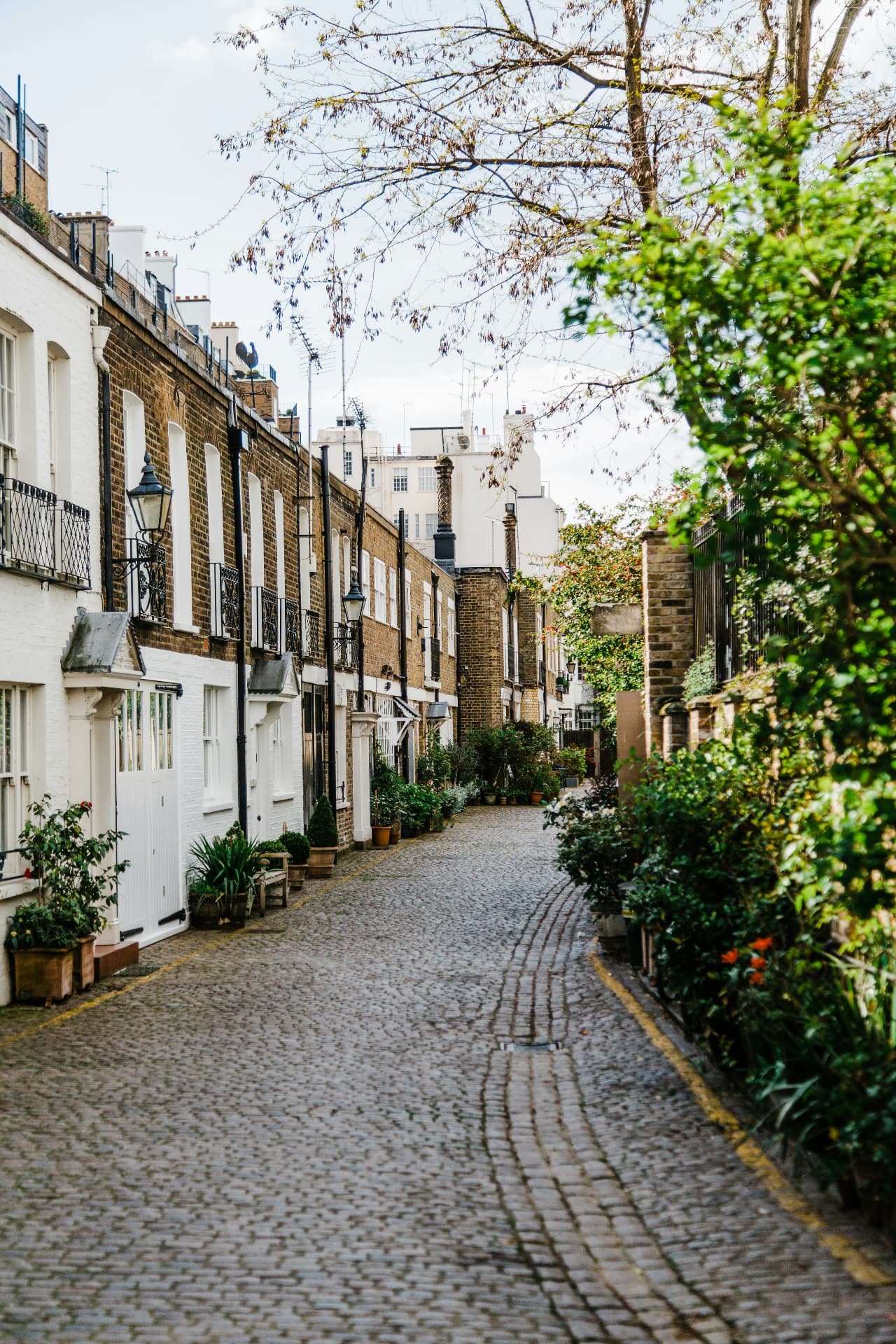
Market Nuances: Kensington vs. Notting Hill
Prime London is not a monolith; it is a collection of distinct micro-markets. In Kensington (W8, W14, SW7), the average price stands at approximately £2,650,000 with a price per square foot of £1,550, based on HM Land Registry figures as of August 2026. The market here is driven by a profound scarcity of 'best-in-class' stock. Whether it is a raised-ground floor flat on Kensington Church Street or a grand house on Phillimore Gardens, sellers are experienced and expect a seamless, professional interaction. The rental market is underpinned by the proximity to Imperial College and the Royal College of Art, providing a consistent yield for investor-occupiers.
Conversely, Notting Hill (W11, W2) offers a different rhythm. With an average price of £2,450,000 and £1,480 per square foot, the market is currently split. Houses with access to communal garden squares, such as those on Elgin Crescent or Lansdowne Road, remain incredibly firm. However, upper-floor conversions without outside space have seen a slower pace. In W11, the photography and presentation of a home are paramount; it is the difference between a property that feels like a home and one that feels like a mere floor plan. For families, the pull of Fox Primary School and Wetherby Prep remains the primary driver for long-term residency.
Talk to Seymont
What's your home worth?
A considered view on price, timing and how to bring your London home to market — a personal reply within 24 hours.
Your property
Step 1 of 2Remote Viewings and Power of Attorney
Buying property in London from abroad does not mean you are at a disadvantage. We personally conduct high-definition video walkthroughs that go beyond the standard marketing material, highlighting the nuances that a camera often misses—the quality of the joinery, the natural light at different times of day, and the ambient noise levels from the street. In locations like Westbourne Grove or Kensington Square, the 'feel' of the street is as important as the square footage, and we act as your eyes and ears on the ground.
To facilitate a smooth closing without needing to fly to London for every document, many international buyers utilize a Power of Attorney (PoA). A specific PoA allows your UK solicitor to sign contracts and transfer deeds on your behalf. This is particularly useful in the final stages of a transaction, where timing can be critical to secure an exchange. By dealing directly with us, you ensure that the communication between your legal team, the seller, and yourself is tight, preventing the delays that often plague larger, multi-departmental agencies.

Talk to Seymont
What's your home worth?
A considered view on price, timing and how to bring your London home to market — a personal reply within 24 hours.
Your property
Step 1 of 2About the author
Nina CastellanoInvestment Property Advisor
Nina advises landlords and investors on rental yields, tenant demand and portfolio structure across Greater London, after running lettings and management at Bellhouse Property Partners. She has overseen single units and multi-property portfolios, and works through compliance, void periods and running costs before a purchase is agreed. Her articles deal with the numbers behind a buy-to-let rather than the headline gross yield.
Lettings and portfolio management · 9 years in London rentals
- Buy-to-let
- Rental yields
- Portfolio strategy
- Landlord compliance
Frequently asked
- Can we buy property in London as a non-UK resident?
- Yes, there are no legal restrictions on international buyers owning property in the UK. However, you will be subject to a 2% non-resident Stamp Duty surcharge and must pass stringent Anti-Money Laundering checks.
- How do we manage a property in London if we live abroad?
- Many of our clients choose a full management service. Given the complexities of UK safety regulations and tenant demands in prius areas like Kensington, having a professional to oversee maintenance and rent collection is essential.
- What are the additional costs for international buyers?
- Beyond the purchase price, you should budget for Stamp Duty (including surcharges), legal fees, survey costs, and potentially a mortgage arrangement fee. According to HM Land Registry data, these can add significantly to the total investment, so early calculation is key.